Retrograde vs bolus injection of botulinum toxin
Retrograde vs bolus injection of botulinum toxin
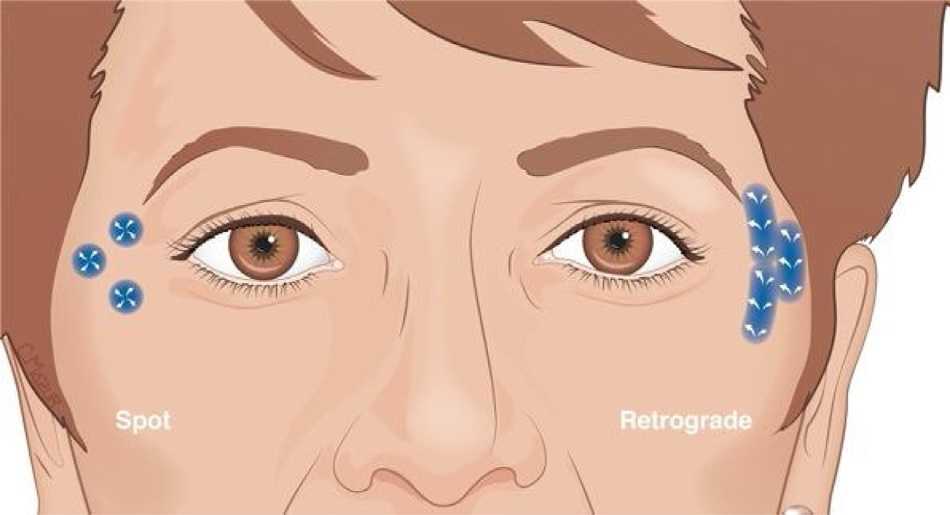
In a recently published study (Labbe et al. Ann Chir Plast Esthet . 2021 Jun;66(3):223-233.), French physicians investigated the difference in efficacy between retrograde and bolus injection of botulinum toxin type A for the treatment of glabellar lines, lateral canthal lines and forehead lines (Fig. 1).
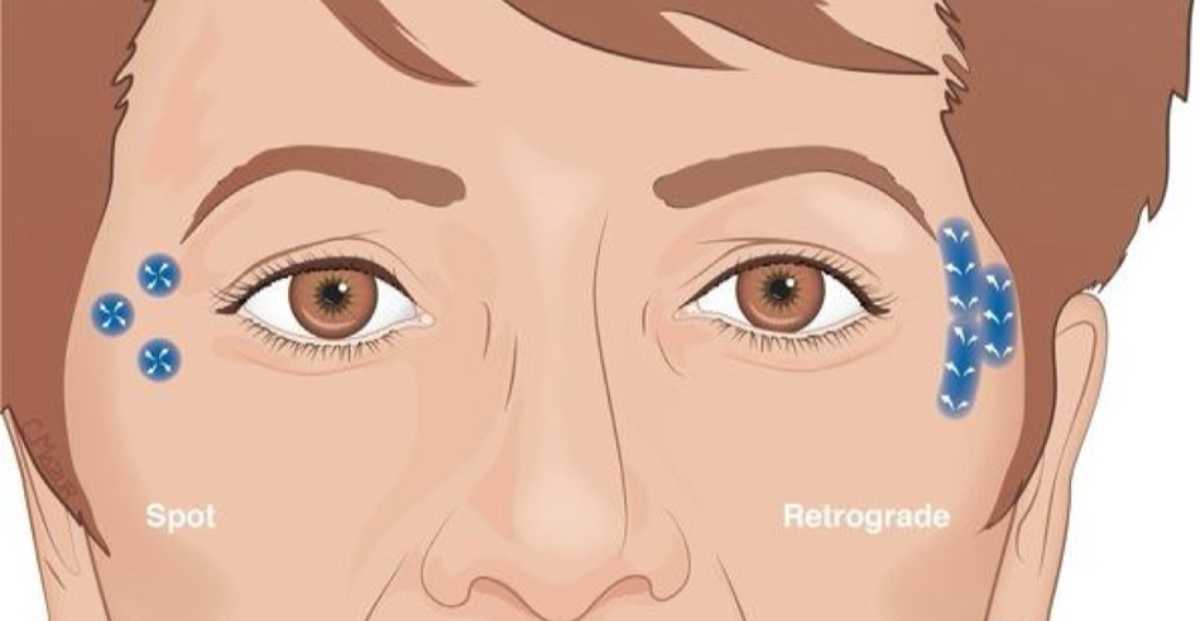
Fig. 1: Bolus vs. retrograde botulinum toxin injection for the treatment of crow's feet
The idea behind it: botulinum toxin shows higher efficacy with retrograde injection (Fig. 2), since in this case the neuromuscular synapses, i.e. the junctions between target muscle and nerve, are reached in a more targeted manner and in a greater proportion.
Some muscles, such as the depressor labii inferioris muscle, do not have a homogeneous distribution of end plates. In this muscle, the end plates are arranged in clusters.
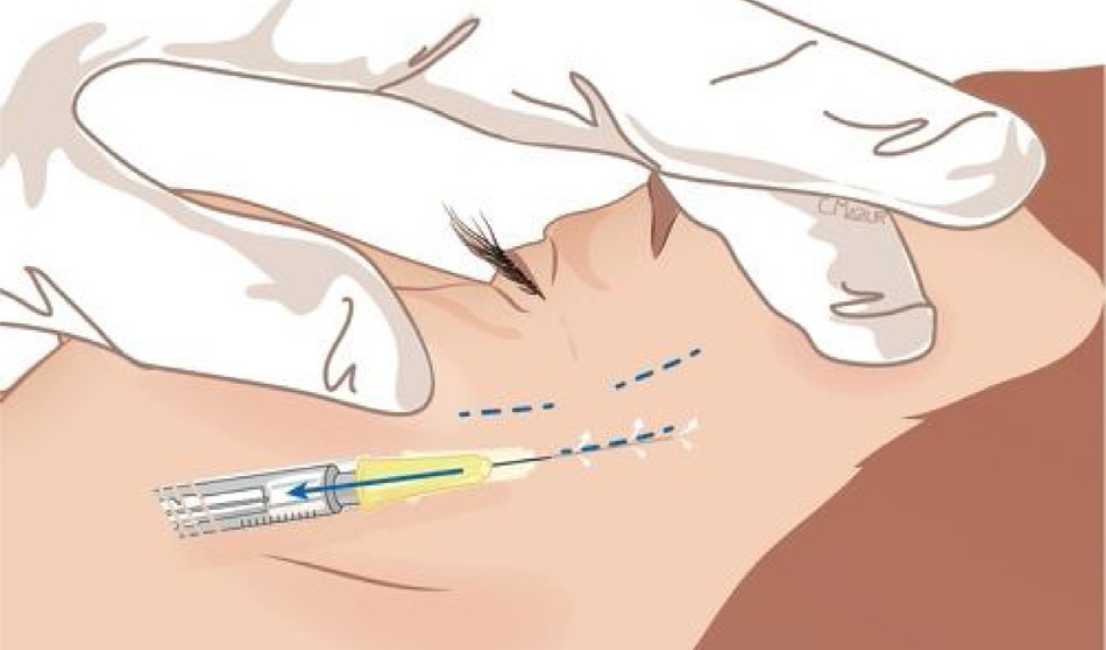
Fig. 2: Retrograde botulinum toxin injection
In some other muscles, by contrast, such as the orbicularis oculi muscle, a homogeneous distribution of neuromuscular end plates is theorised (Fig. 3).
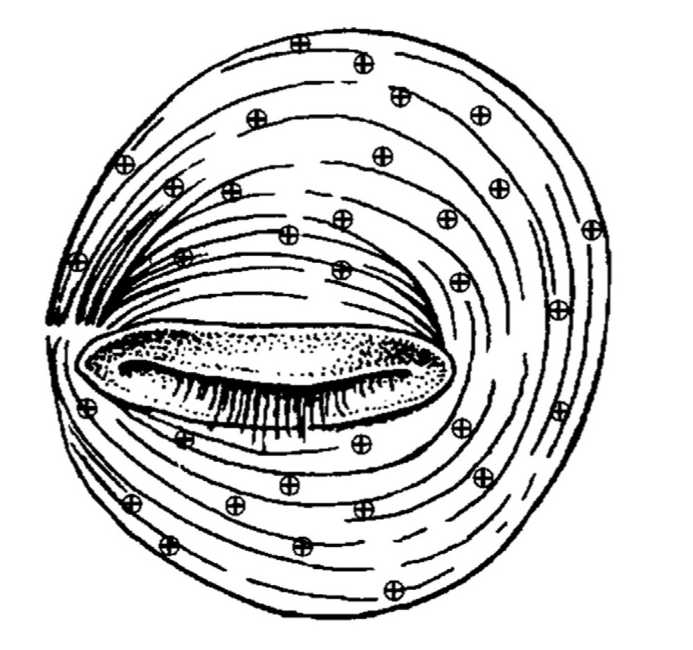
Fig. 3: Neuromuscular end plate distribution according to Wolfgang Happak
Methods in this study:
- 10 female patients (mean age: 46.25 years)
- Indications: glabellar lines, crow's feet, forehead lines
- Left half of the face: classic bolus injection; right half of the face: retrograde injection
- 2 A.E.* per injection point (with classic bolus injection)
- Target muscles: frontalis muscle (6 A.E. in total), corrugator supercilii muscle (4 A.E.), orbicularis oculi muscle (6 A.E.)
- Facial analysis on day 8 post-injection to assess efficacy
- Follow-up on day 15 post-injection to assess safety and patient satisfaction
Results:
On the day of the check-up (8 days post-injection), the authors found significantly higher efficacy with retrograde injection into the orbicularis oculi and corrugator supercilii muscles in 9 of 10 patients. That is, 9 of 10 patients required a touch-up treatment on the left half of the face (bolus injection). By contrast, 1 of 10 patients required a touch-up treatment in the area of the glabellar lines on the right half of the face (retrograde injection).
For the forehead lines, no difference in efficacy (bolus injection vs. retrograde injection) was found.
Conclusion:
According to the present study, better distribution of botulinum toxin in the target muscle can be achieved by means of retrograde injection. This can potentially be associated with a lower dose, lower treatment costs and fewer adverse effects. Nevertheless, it must be noted that further larger-scale studies are necessary for these results to be reliably revalidated.
*It should be noted that A.E. (Allergan units) cannot be equated 1:1 with S.E. (Speywood units). 1 A.E. or 1 M.E. (Merz unit) corresponds to 2.5 S.E.
Source:
Labbe et al. Ann Chir Plast Esthet . 2021 Jun;66(3):223-233. doi: 10.1016/j.anplas.2020.06.006. Epub 2020 Jul 24.