Microbotox: facial rejuvenation and facelifting
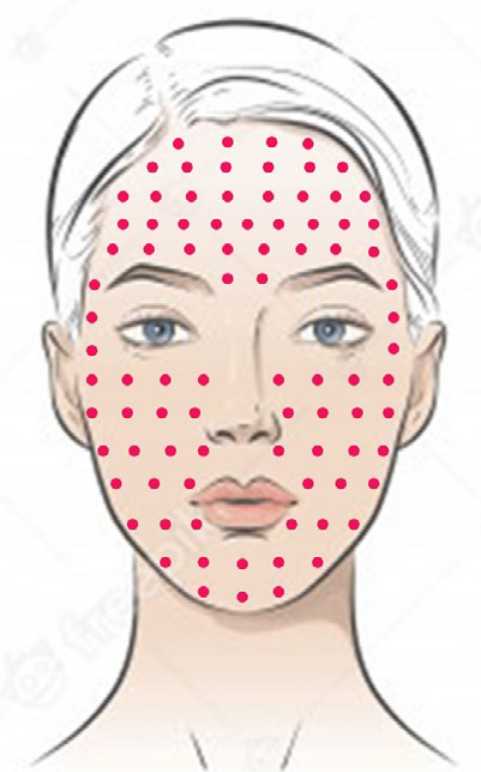
The Microbotox injection technique (also: micro-dosing/baby Botox/mesobotox) refers to the intradermal injection of microdroplets of botulinum toxin type A (BoNTA) in order to improve skin quality over a wide area by locally reducing the size of skin pores and reducing oil and sweat production.
A trend analysis shows that this injection technique is seeing a growing trend worldwide.
A recently published literature analysis (Iranmanesh et al. J Cosmet Dermatol . 2022 Jan 22) comprehensively summarises injection techniques and points as well as dosing and concentration recommendations. The preparations/active substances onabotulinumtoxin A (OBA), abobotulinumtoxin A (ABO) and incobotulinumtoxin A (IBA) are covered. A total of 20 publications are included in this literature analysis. The indications and injection points are illustrated below (Fig. 1).
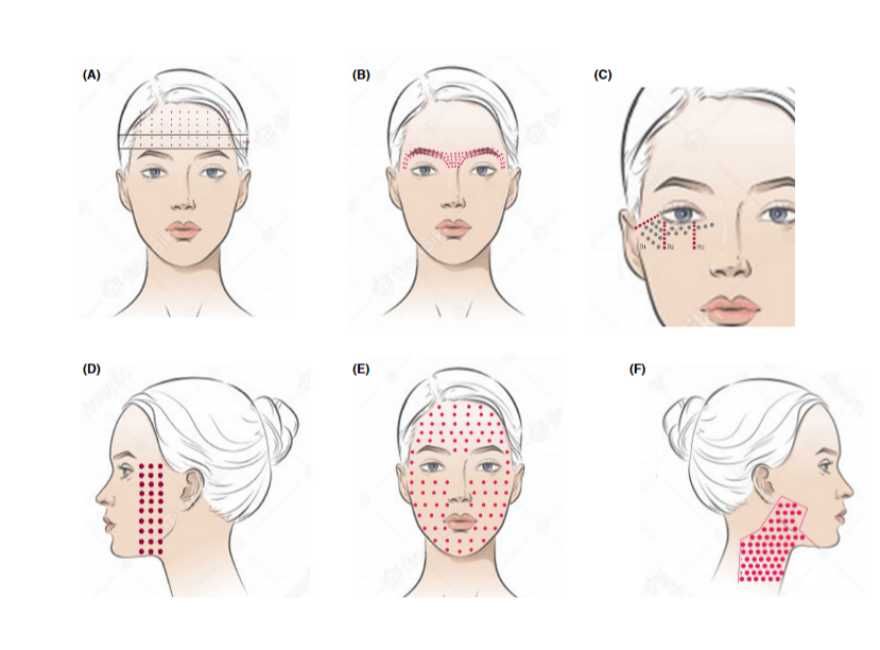
Figure 1: Treatment areas and injection points for Microbotox. (A) Forehead (B) Eyebrows, glabella and periorbital (C) Infraorbital (D) Temporal and cheek area (infraorbital to the jawline) (E) Entire face (F) Mandible and neck area.
In all publications, the BoNTA was reconstituted with preservative-free 0.9% saline. Various concentrations were used. The most frequently used concentrations were 10–20 Allergan units/ml OBA. In most studies, insulin syringes with 30–32G needles were used. An autoinjector was used in three studies. In one study, a 27G microcannula was used in areas of thin skin to reduce the risk of ecchymosis.
For patient comfort, a topical local anaesthetic was used in all studies but one. In addition, lidocaine was added to the BoNTA solution in two studies, and a nerve block was used in one study.
The number of injection points varies depending on the study and treatment area, from 4 injection points (e.g. forehead and periorbital area) up to 999 (entire face), each with a spacing of 2 mm to 2 cm per injection point. The injection volume varies between 0.01 and 0.2 ml per injection point.
Combination treatments were carried out in some studies. The adjuvant treatment modalities include injection of cross-linked hyaluronic acid, IPL (intense pulsed light) and non-ablative laser treatment (Fraxel laser). Some studies reported an immediate onset of effect, whereas most studies documented an onset of effect 5–14 days post-injection – with a duration of effect of 3–6 months.
Further injection guidance is given in the published literature analysis by Iranmanesh et al. (J Cosmet Dermatol . 2022 Jan 22).
Source:
Iranmanesh et al. J Cosmet Dermatol . 2022 Jan 22. doi: 10.1111/jocd.14768.