Influence of COVID-19 mRNA vaccination on the efficacy and safety of botulinum toxin (Botox) treatments
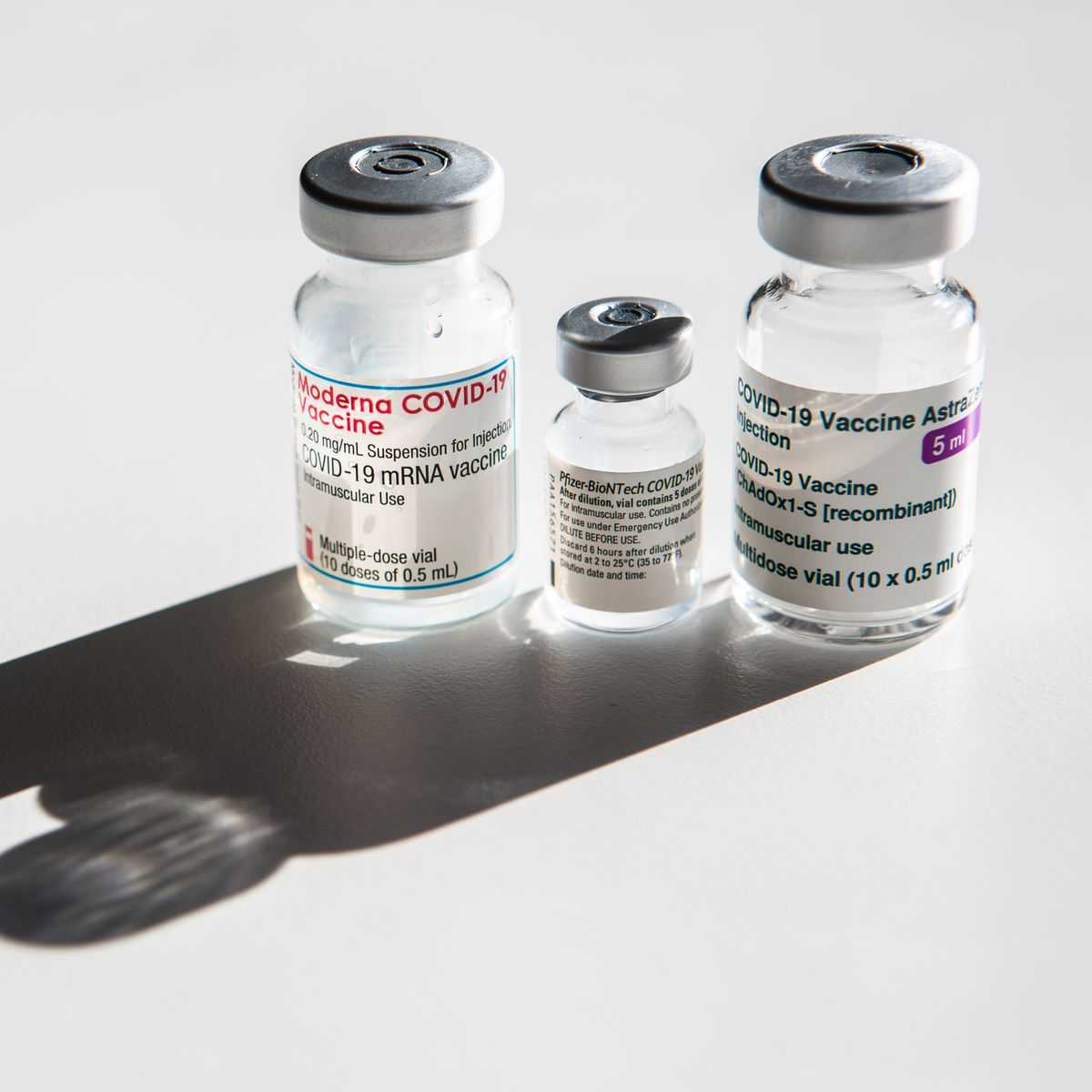
Indications that COVID-19 vaccination influences the efficacy of botulinum toxin type A (BoNT-A) treatments have so far been anecdotal in nature. A recently published study has demonstrated for the first time a correlation between BNT162b2 mRNA vaccination and the efficacy of BoNT-A.
Study methodology
In a retrospective cohort study, Azzam et al. (2022) observed patients who were regularly treated with BoNT-A and had received two doses of the BNT162b2 vaccine. The intervals between Botox treatments before and after vaccination were documented for all study participants. The efficacy and duration of effect of the Botox treatments were determined and assessed on the basis of these treatment intervals. The patients were monitored longitudinally for the occurrence of adverse events.
All patients were treated by the same physician for the following indications: forehead, glabella and lateral periorbital lines. The assessment of efficacy and duration of effect was carried out by the same physician.
Results
A total of forty-five patients were included in the study. The mean age (standard deviation [SD]) of the patients was 48.3 (8.9) years, and 40 (88.9%) of the patients were female. The mean number of BoNT-A treatments before and after COVID-19 vaccination was 5.1 (2.6) and 3.1 (0.4) treatments, respectively.
The mean interval between BoNT-A treatments after COVID-19 vaccination (96.0 [12.3] days) was significantly shorter than before vaccination (118.6 [22.7]; P<0.001) (see Fig. 1). After administration of the BNT162b2 vaccine, no serious BTA-associated adverse events were recorded.
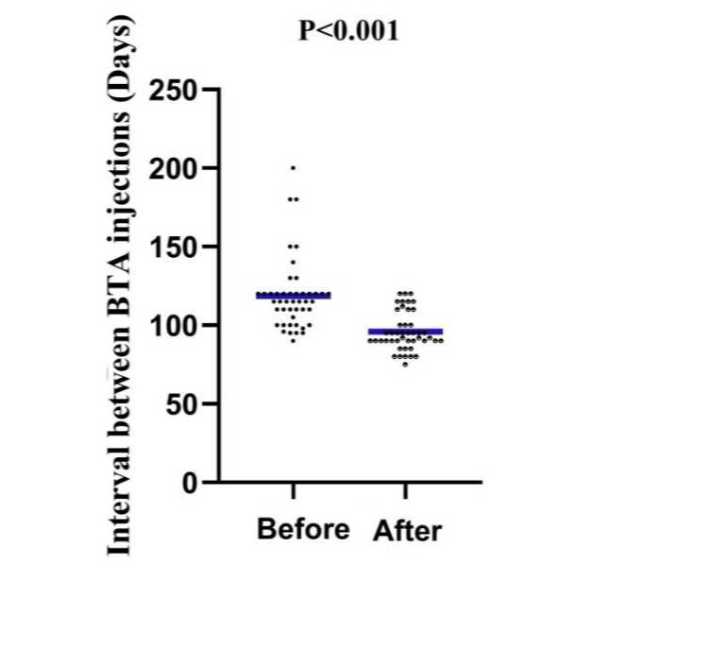
Fig. 1: Intervals between BoNT-A treatments before and after administration of the BNT162b2 mRNA vaccine. Each dot represents the mean interval between BoNT-A treatments for an individual patient. The blue bars represent the mean of all intervals. (Editor's note: in the original publication, “Before” and “After” appear to have been incorrectly swapped; we have presented the facts correctly in our blog.)
Discussion
The study discussed here demonstrates that the BNT162b2 vaccine is associated with a shortening of the treatment interval between BoNT-A injections. This observation probably reflects reduced efficacy of BoNT-A treatments after COVID-19 mRNA vaccination.
In 2021, Guo et al. reported two cases of a subacute hypersensitivity reaction to BoNT-A following COVID-19 vaccination. Both patients had received BoNT-A injections before the pandemic without any adverse effects. This suggests that the COVID-19 vaccine may possess an immunogenic character that promotes an immune response to BoNT-A. Such an immunological reaction could therefore modulate the molecular biological action, and thus also the efficacy or duration of effect, of BoNT-A, so that more frequent injections become necessary.
For a definitive conclusion, however, further immunoserological studies are required to investigate the formation of neutralising antibodies against BoNT-A. In addition, further studies are needed to describe the mechanism responsible for the observations in the study described here.
Conclusion
The results suggest that BoNT-A may be less effective after COVID-19 vaccination. However, further investigations are required to elucidate the underlying mechanism. Practitioners and patients alike should nevertheless be aware that the efficacy of BoNT-A may be reduced after COVID-19 vaccination. Patient education is therefore important in order to manage patients' expectations.
Source: Azzam et al. J Cosmet Dermatol . 2022 Sep;21(9):3663-3666. doi: 10.1111/jocd.15251. Epub 2022 Aug 8.