The influence of the botulinum toxin injection dose on the appearance of surgical scars
The influence of the botulinum toxin injection dose on the appearance of surgical scars
There is sufficient evidence that early postoperative injection of botulinum toxin type A (BoNT-A) can reduce the degree of hypertrophy of surgical scars. In this context, it is also known that efficacy correlates with the exact timing of BoNT-A treatment. Studies on different BoNT-A dosages, however, have not been a focus to date.
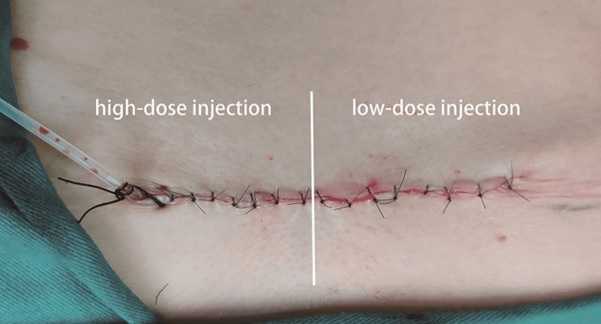
In a randomised, so-called split-scar study (with n = 22 patients, mean age = 37 years, 11 male and 9 female), Chen et al. (2021) investigated the influence of different BoNT-A dosages injected intradermally after a surgical procedure (here: tumour excision; without muscle involvement). Immediately after surgery, either a low dose (4 Botox® units/injection point, spaced 1 cm apart) or a high dose (8 Botox® units/injection point) was injected into each half of the surgical wound closure, 5 mm from the wound edge (Fig. 1).
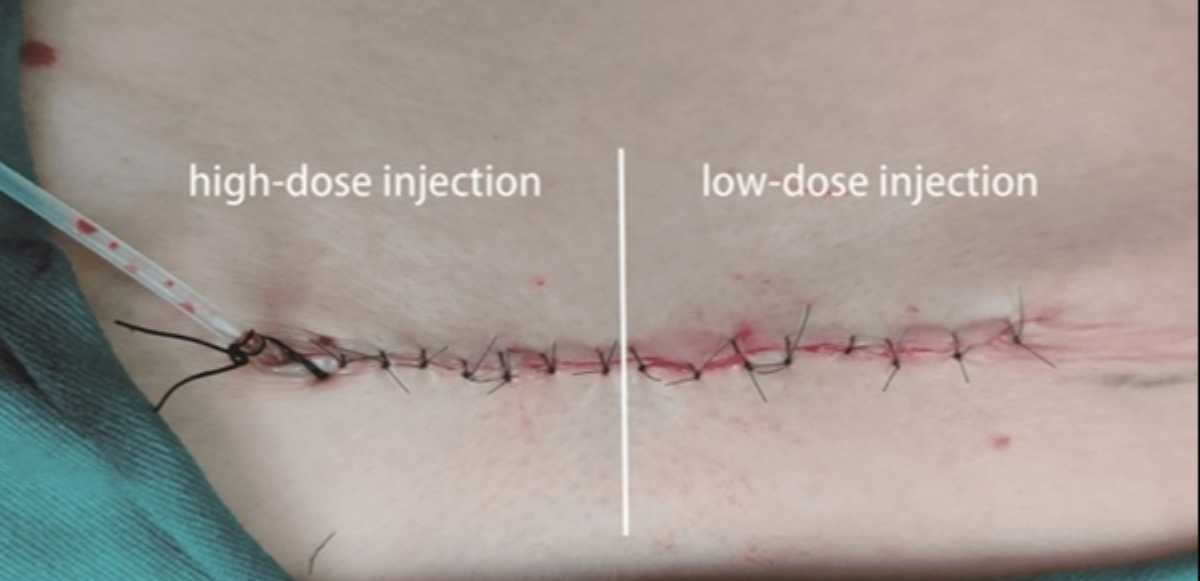
Fig. 1: Scar on the back, 6 months after the surgical procedure. Left: high BoNT-A dose; right: low BoNT-A dose.
Results:
The scar halves treated with the high BoNT-A dose showed significantly better mSBSES scores than the halves treated with the low BoNT-A dose (Figs. 1 and 2). No serious adverse effects or complications were observed.
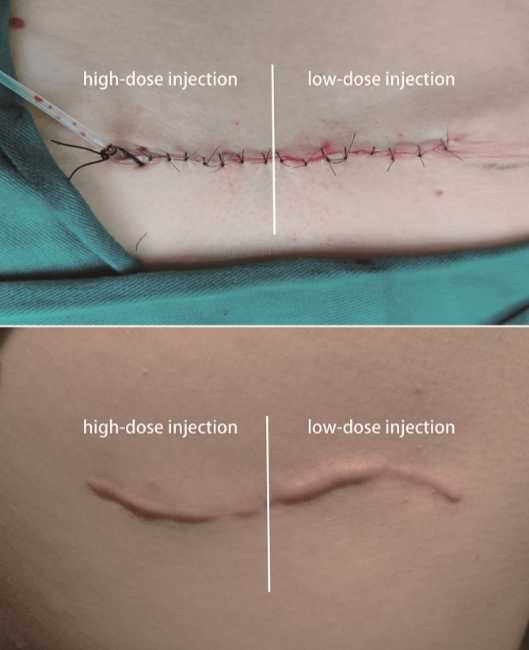
Fig. 2: Top: scar on the abdomen at the start of the study (baseline). Bottom: scar on the abdomen, 6 months after the surgical procedure. Left: high BoNT-A dose; right: low BoNT-A dose.
Conclusion:
In summary, it should be noted that, owing to differences in scar development, individual tissue characteristics and predisposing factors, there is no uniform treatment regimen. However, findings from evidence-based studies show that immediate BoNT-A injection in the therapeutic range can improve the appearance of surgical scars.
Reference:
Chen et al. Sci Rep. 2021; 11: 13670.