Botulinum toxin: reconstitution with unpreserved vs. preserved physiological saline
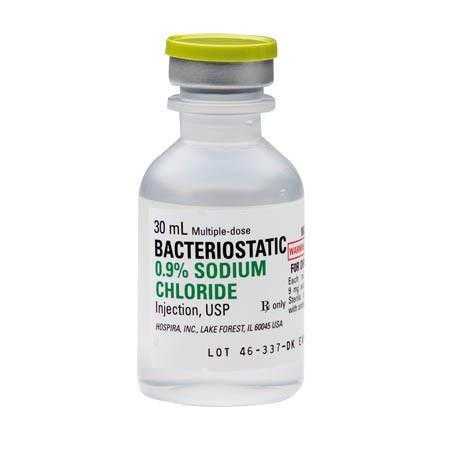
All BoNT-A formulations in powder form should, in accordance with the manufacturers' recommendations, be reconstituted with sterile, unpreserved saline. However, there is convincing evidence that reconstitution with preserved saline considerably improves patient comfort without impairing efficacy. In addition, “aggressive” reconstitution (small-diameter needles, longer injection-aspiration time and vigorous shaking) can reduce efficacy.
In a prospective study, one half of the face was treated with BoNT-A reconstituted with preserved saline and the other side with BoNT-A reconstituted with preservative-free saline. All 15 patients reported less pain (mean difference: 54%) on the side treated with preserved saline. Neither the investigators nor the patients reported differences in efficacy between the two sides. In the retrospective arm, 90% of 20 patients, who were treated mainly for dynamic lines in the upper face, reported that the injections with BoNT-A reconstituted with preserved saline were less painful than the previous treatment with BoNT-A reconstituted with preservative-free saline.
Other studies also confirm that BoNT-A reconstituted with preserved saline is less painful. Allen and Goldenberg, for example, treated glabellar lines and crow's feet on one side of the face with Dysport reconstituted with preserved saline and on the other side with preservative-free saline. Of 20 volunteers, 90% reported 60% less pain on the side injected with preserved saline.
Sarifakioglu and Sarifakioglu compared pain after the administration of Dysport reconstituted with preserved or preservative-free saline in the upper face, the neck and the axillae using a 10-point visual analogue scale. The mean pain score was 1.2 with preserved saline and 4.5 with preservative-free saline in the upper face, and 0.6 and 3.9 with preserved and preservative-free saline respectively in the neck area. For axillary administration, the pain scores were 0.9 and 5.1 with preserved and preservative-free saline respectively.
Source: Dover et al. Dermatol Surg. 2018 Feb; 44(2): 249–260.