Lip indication: vertical vs. horizontal injection technique with hyaluronic acid fillers
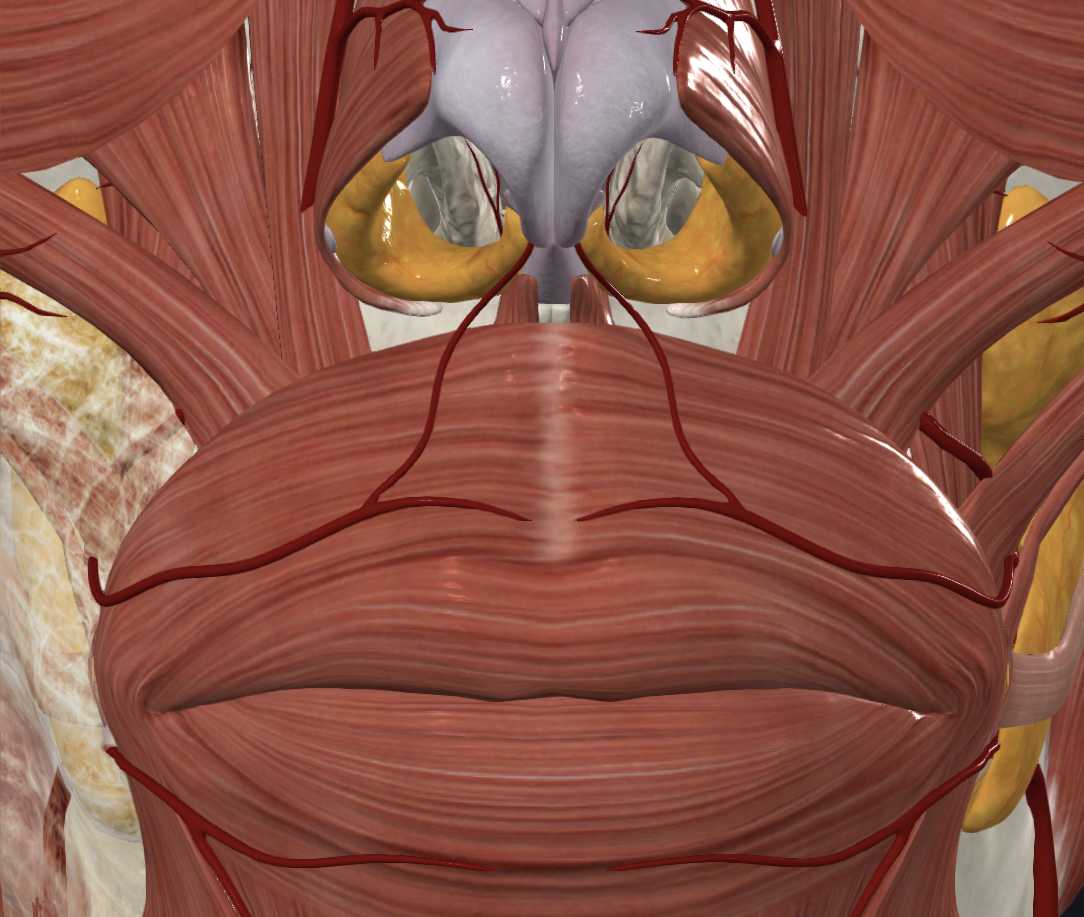
In this blog post, we would like to give an overview of lip anatomy and the associated implications for the choice of injection technique, so that you can achieve safe and effective treatment with hyaluronic acid fillers.
The question of which injection technique (vertical vs. horizontal) is safer and more effective has always been debated in the medical community. At our workshops, we repeatedly experience lively and constructive discussions about fundamental questions, such as the location of the labial artery and the advantages and disadvantages of a horizontal and a vertical injection technique.
2D anatomical drawings and illustrations, e.g. from textbooks, often convey an inadequate three-dimensional understanding of lip anatomy, particularly of the course of the arteries. This is an important point, because in discussions and in the exchange of knowledge and experience between specialists, publications are (understandably) repeatedly taken as the basis for deciding on a safe injection technique.
It should be noted, however, that the numerous publications speak different languages when it comes to anatomical terms and positional relationships. For example, some English-language publications claim that the labial artery runs along the “wet-dry border”, i.e. not where many practitioners actually expect the artery to be. Other publications, in turn, state that the labial artery lies at the level of the vermilion border. And it is precisely this discrepancy that makes it difficult to reach a consensus. Such inaccuracies ultimately mean that there is no definitive conclusion and that understanding varies.
Let us consider, for example, the thickness of a needle, which is 0.4 mm. If a publication claims that the labial artery lies at the vermilion border or the wet-dry border, the impression arises that the artery is to be found exactly there. However, these anatomical regions can cover an area of 2–5 mm, and the puncture site with the needle is imprecise. The problem therefore lies in the imprecise terminology of the two anatomical designations. It is therefore very important to have a three-dimensional understanding of lip anatomy.
We can show further implications using the figures below:
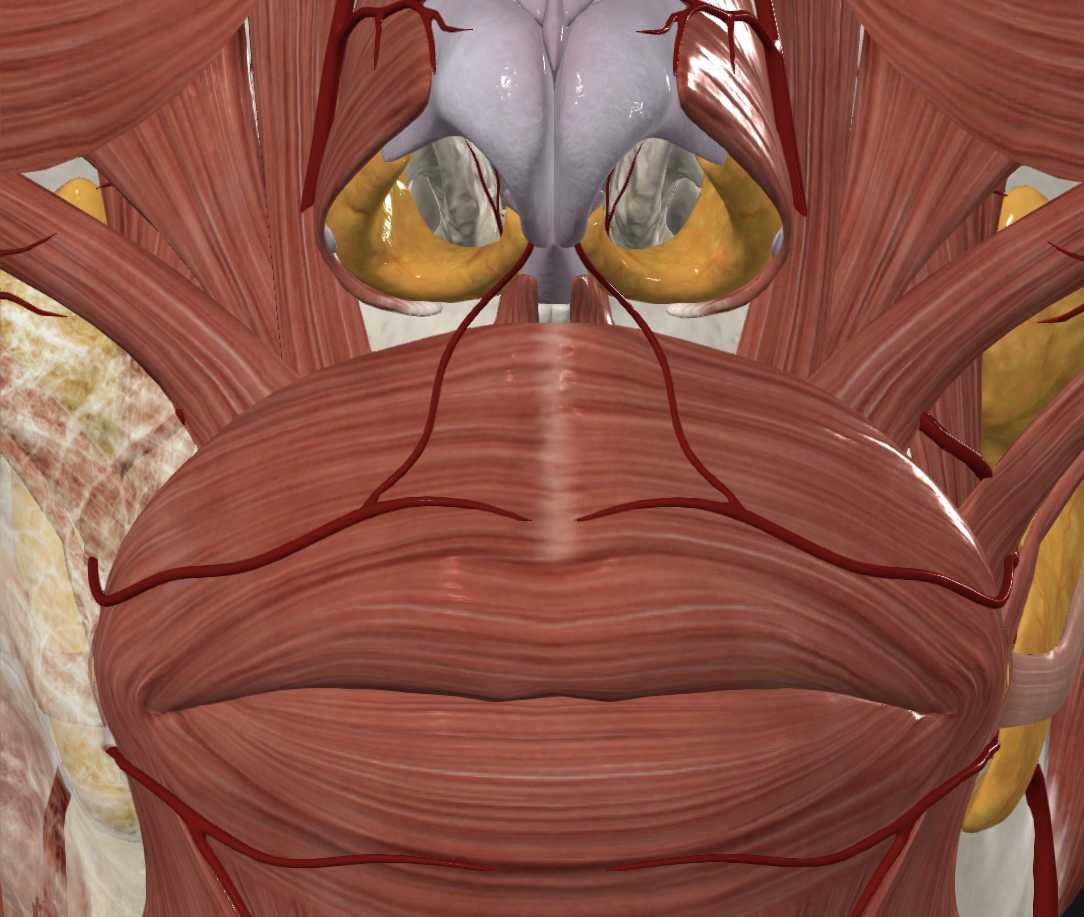
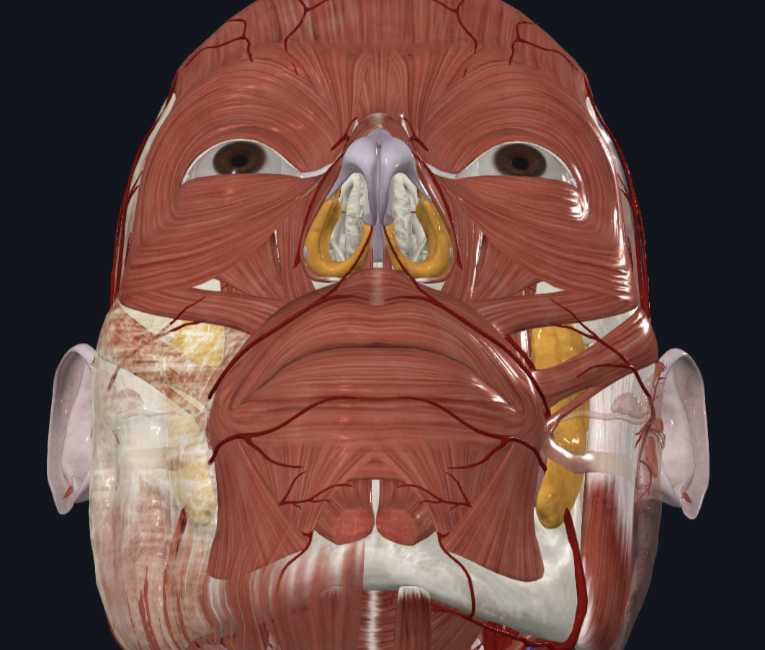
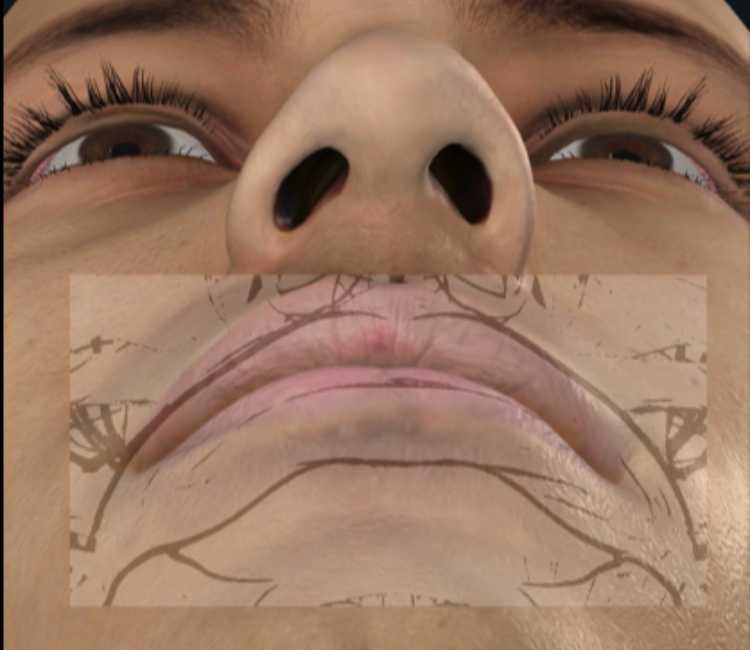
In the frontal view, the labial artery appears to lie on the vermilion border.
From the inferior perspective, by contrast, it looks as though the artery lies further down and deeper, i.e. at the wet-dry border. This is because the labial artery also lies approx. 5 mm deep.
It is therefore important to take both perspectives into account in facial and lip analysis.
Let us now return to the original question: horizontal vs. vertical injection technique. Which is safer?
Whether you enter with the needle perpendicularly or horizontally during treatment is, in our opinion, less relevant. Both injection techniques can be (un)safe. More important here is the injection depth, which should be rather superficial so that the superior labial artery is not punctured. It should therefore be borne in mind that the labial artery lies on average 5 mm deep. In older patients, age-related elongation and inversion of the lips can often be observed, so that the vermilion border shifts inwards. This means that, for a vertical injection, a different insertion angle than in younger patients (e.g. 45 degrees) must necessarily be chosen.
In older patients, it may therefore make sense to place the needle behind the muscle. This is purely a precautionary measure, as smaller and “older” lips tend to require a steeper insertion angle. Also to be noted: as the labial artery runs horizontally, the injection paths also lie parallel to the artery. However, if the horizontal technique is performed carefully, it is well suited to shaping the lips and defining the vermilion border.
You can learn further interesting points on the lip indication in our online video course on this exciting indication at Medemie - Lips & perioral indications - hyaluronic acid filler specialist course.
|
Our conclusion: The debate about the horizontal or vertical injection technique is more a debate about precise definitions of terms and anatomical positional relationships. We are convinced that a fundamental understanding of the three-dimensional anatomy of the lips can contribute to the solution. |