Surgical rhinoplasty after previous nasal reshaping with hyaluronic acid
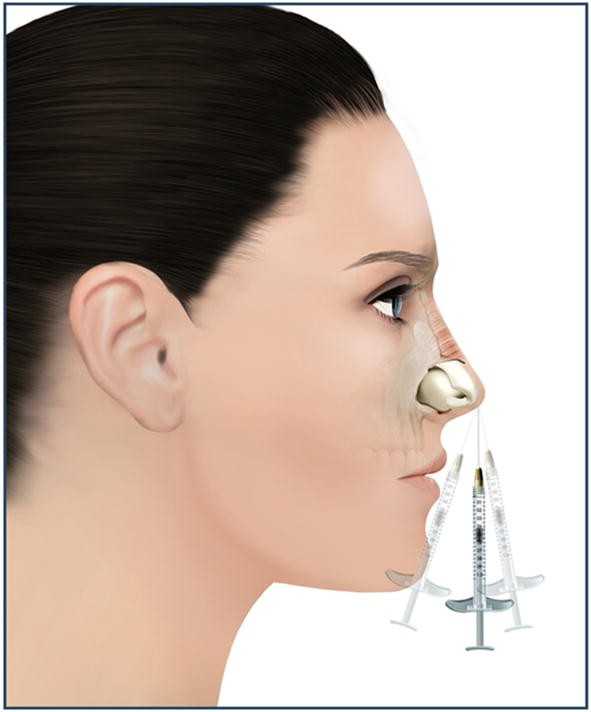
Non-surgical rhinoplasty is a procedure in which autologous or synthetic fillers are used in specific areas of the nose in order to shape the nose. The most commonly used synthetic filler is hyaluronic acid, but other products such as calcium hydroxyapatite or polycaprolactone can also be used. Autologous fat or cartilage can also be used, whereby cartilage from the nasal septum, the ears and the ribs can be shaped and placed to improve the functional and aesthetic appearance of the nose.
Non-surgical nose corrections
The advantages of HA over other synthetic products are its reversibility and the possibility of correcting complications or unsatisfactory results with enzymes such as hyaluronidase. Minor deformities of the nose can generally be treated with fillers, either as a primary or as a postoperative measure. Hyaluronic acid nasal injections are recommended for minor cosmetic corrections and for nasal augmentation and are most commonly used to alter the projection and rotation of the nasal tip, to create columellar support, to mask the dorsal hump, to increase dorsal height and width, to reposition the nasofrontal angle and to improve contours, including the supratip region.
The ideal injection depth for hyaluronic acid injections is the supraperiosteal or supraperichondrial plane, as the risk of vascular injury is lowest here.
When assessing the nose, the following four criteria can be taken into account:
- the labiocolumellar angle
- the nasofrontal angle
- the aesthetic lines of the dorsum and
- the points that define the nasal tip
The injection is carried out in three steps:
- At the labiocolumellar angle: in the supraperiosteal layer at the level of the anterior nasal spine, between the two medial crura of the alar cartilages.
- At the radix: in the supraperiosteal layer at the nasofrontal angle, above the bony prominence.
- Hyaluronic acid and hyaluronidase (Figures 1 and 2)
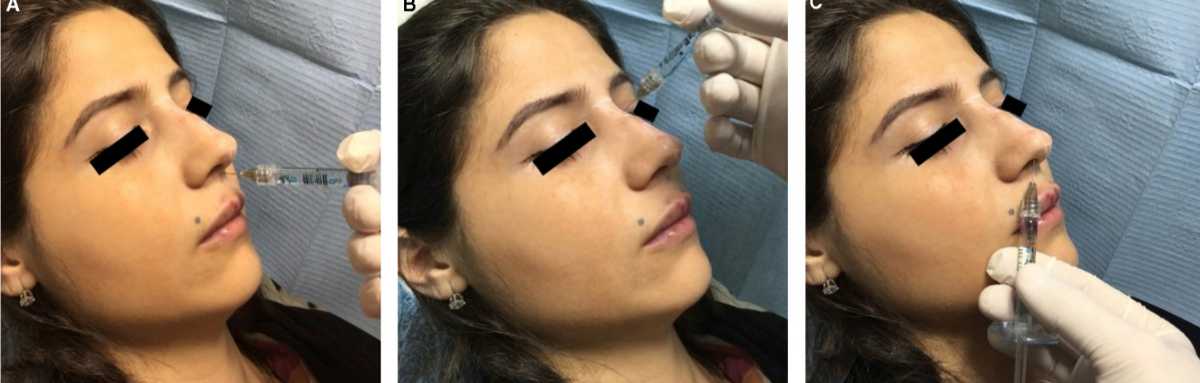
Figure 1: Injection technique according to L Abboud et al (2023). A. Anterior approach to the nasal root. B. Approach via the nasal dorsum. C. Approach to the nasal tip, above the alae.
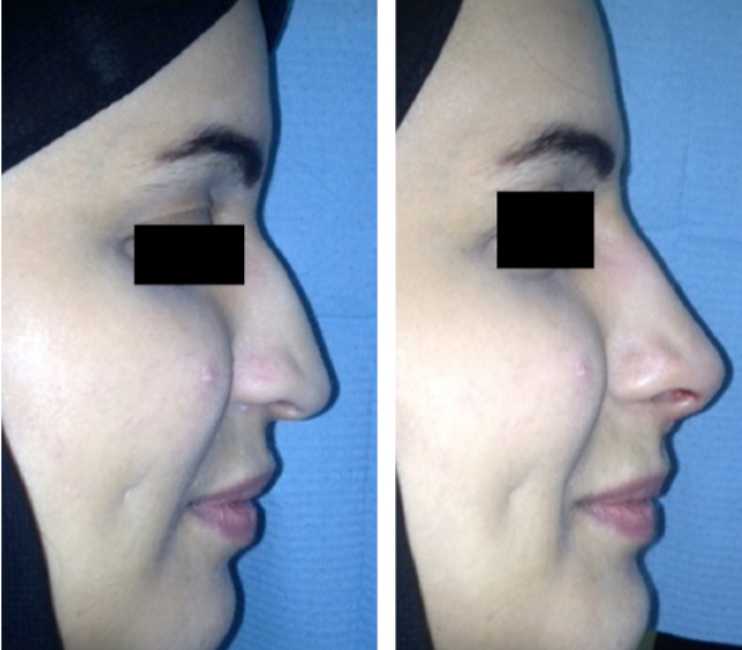
Figure 2:Example of a patient on whom the hyaluronic acid technique fromL Abboud et al (2023) was used. When performed correctly, considerable deformities can also be treated with it. If the patient wishes to have a surgical nose correction shortly after the injection, or if she has already received several HA injections, the initial deformities of the nose may be masked by these injections, which is why it is necessary to inject hyaluronidase preoperatively in one or more sessions. A. Patient before the nasal HA injection. B. After the nasal hyaluronic acid injection.
To minimise the risk of vascular complications, lateral, dermal and subcutaneous injections should be avoided, particularly in the area of the glabella, the alar rim and the nasal tip. It is advisable to inject the hyaluronic acid slowly in small volumes and to avoid bolus injections in order to preserve the integrity of the skin. Pinching the soft tissue can help to reduce the risk of vascular complications, bleeding and lateral displacement of the hyaluronic acid.
Surgical nose corrections after one or more hyaluronic acid injections
If patients want / need a surgical rhinoplasty after hyaluronic acid treatment, a precise medical history is necessary in order to know the characteristics of the product previously injected. A preoperative ultrasound examination can help to identify the type of product, estimate the remaining volume and determine the injection layer (Figures 3 and 4).
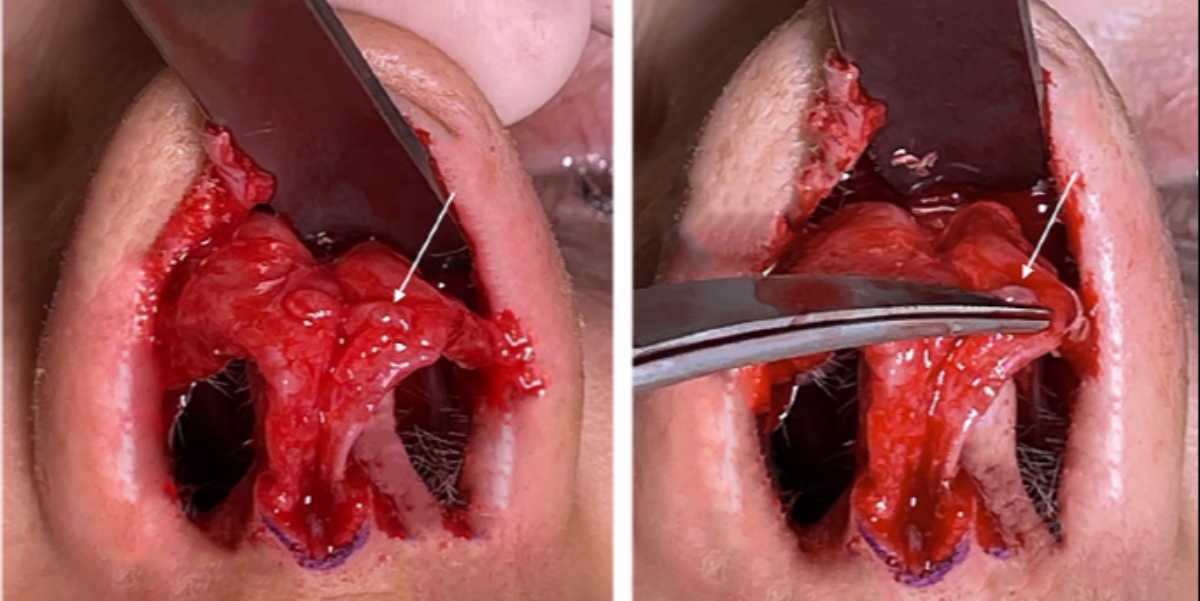
Figure 3: Intraoperative evidence of hyaluronic acid residues (white arrows) at the nasal tip in the supraperichondrial plane.
Hyaluronic acid and hyaluronidase
Hyaluronidase is mostly manufactured as an enzyme from sheep and cattle that is produced using recombinant DNA methods. Clinical studies have shown that hyaluronidase can dissolve intradermal nodules caused by a previous hyaluronic acid injection. Allergic reactions to hyaluronidase are rare but can be severe. A history of allergic reactions or anaphylaxis should be taken before use. The use of hyaluronidase in inflamed or infected areas and in pregnant women is not recommended. A detailed medical history of the patient is necessary, as certain medications can interact with hyaluronidase. It should be noted that hyaluronidase preparations are currently not approved for cosmetic purposes by the FDA or the EMEA.
Source: L Abboud et al. Ann Chir Plast Esthet . 2023 Apr 11;S0294-1260(23)00036-5. doi: 10.1016/j.anplas.2023.03.006.