Online continuing education course for physicians / healthcare professionals. Fundamentals of facial anatomy with 3D animations and dissections on human cadaver specimens.
Free trailerFree preview · the full course is available after purchase.
In the course after purchase: an AI summary for each chapter based on the official course notes — and ask the AI questions about the content directly.
This online anatomy course is ideally suited to those who wish to gain a basic understanding, or a generally better understanding, of the complex anatomy of the face. We offer the full spectrum of high-quality learning content – from 3D animations to dissections on human cadaver specimens.
Over the last decade in particular, our understanding of facial anatomy has improved substantially. In the context of minimally invasive procedures for facial rejuvenation, it is therefore essential to acquire up-to-date anatomical knowledge. Only in this way can treatment be safe and effective.
In this course you will learn to understand the spatial relationships and the functional interaction of the soft tissues of the face. We offer you a compact and well-founded basic understanding of the individual layers and structures (bones, ligaments, fasciae, muscles, fat compartments, skin) and their clinical relevance. With regard to facial ageing in particular, it is essential to know how these structures contribute to facial ageing in specific ways.
The aim of the course is to build sound basic knowledge of facial anatomy. This gives you a comprehensive understanding of how minimally invasive aesthetic treatments with, for example, botulinum toxin, fillers or thread lifting can be performed effectively and, above all, safely. Our anatomy courses are empirically based and are led by recognised experts. The structural anatomical features of the face, treatment procedures and the management of adverse effects are taught using human cadavers. This practical experience not only increases know-how but, as experience shows, also has a decisive effect on confidence with regard to the respective treatments. As a result, patient safety and satisfaction with the treatment and the outcome increase. At the same time, the risks of complications can be reduced. Anatomy training is therefore regarded worldwide as a key qualification and thus as one of the must-haves for practitioners of aesthetic medicine.
In the basic course we concentrate on the fundamentals, the 5-layer principle, the jawline and the chin, the lips and the nose.
After the course, you will be able to:

Prof. Dr. med. Thilo L. Schenck is a multi-award-winning specialist in plastic and aesthetic surgery with a focus on breast surgery, aesthetic facial surgery and body contouring. He is also a sought-after speaker and trainer for continuing medical education events in the field of aesthetic medicine. His scientific research group is one of the most active worldwide in researching the ageing process of the face and the safety and efficacy of aesthetic treatments. He has published his scientific findings in more than 70 articles in scientific journals. Since 2020 he has been head physician for breast, plastic and aesthetic surgery and medical director of the renowned Geisenhoferklinik in Munich. Before joining the Geisenhoferklinik, he was deputy director of the Department of Hand, Plastic and Aesthetic Surgery at Ludwig-Maximilians-Universität (LMU). In 2020 he was appointed Professor of Plastic and Aesthetic Surgery at LMU on the basis of his extensive work on the anatomy and ageing of the face. Awards: 2019 PRS Best Paper Award of the journal “Plastic and Reconstructive Surgery” · 2016 Science Award of the DGPRÄC · 2015 habilitation at TU München in the field of regenerative medicine.
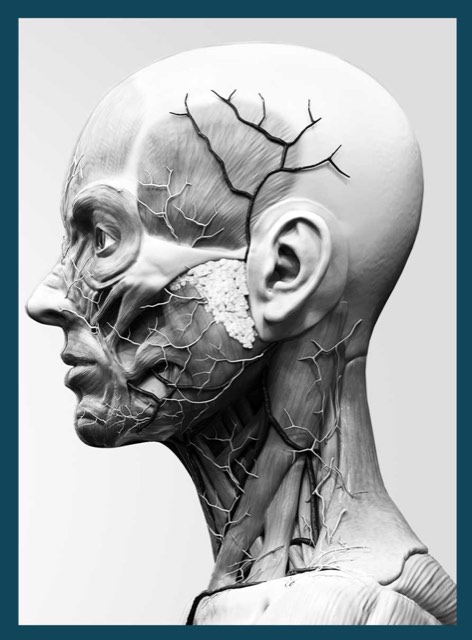
Overview of the relevant anatomical layers of the face and their clinical significance in aesthetic medicine.
Treatment of the temple with hyaluronic acid filler: penetration force through the superficial and deep temporal fascia and implications for treatment
Read →Expert articleThree injection points in the treatment of glabellar lines with botulinum toxin - effective, safe and anatomically sound?
Read →Expert articleAnatomical proposal for the injection of botulinum neurotoxin for horizontal forehead lines
Read →