The future of aesthetics: robotics in facial injections?
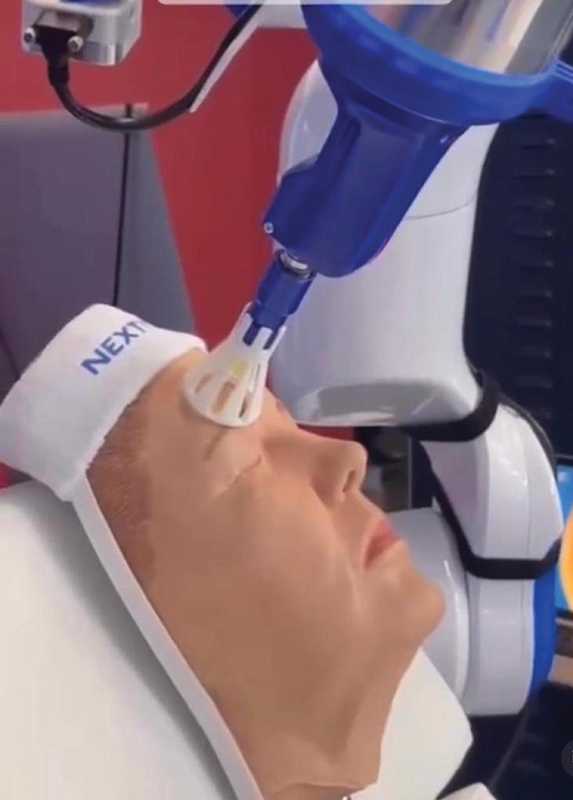
As technology advances, the field of aesthetics is undergoing transformative change, with robotic technology emerging as a potential game changer in facial filler injections. This article examines the development of this innovative approach, its historical roots, and the advantages and disadvantages of robot-assisted procedures.
Brief history:
The journey of robots in surgery began in 1985 and marked a significant milestone in precision medicine. Over the years, advances led to the development of sophisticated robotic systems such as the da Vinci Surgical System. In facial aesthetics, robots have already found applications in intraoral surgery, plastic surgery, ophthalmology, dentistry and even hair transplant surgery.
Robots in facial filler injections:
NextMotion's LENA (Light-Enabled Neuro-Robotic Arm, see fig. below) is an example of the latest innovations. The company, led by Dr. Emmanuel Elard, designed LENA for the injection of neuromodulators and fillers using artificial intelligence. The robot enables users to program injection parameters to ensure precise and customisable treatments.
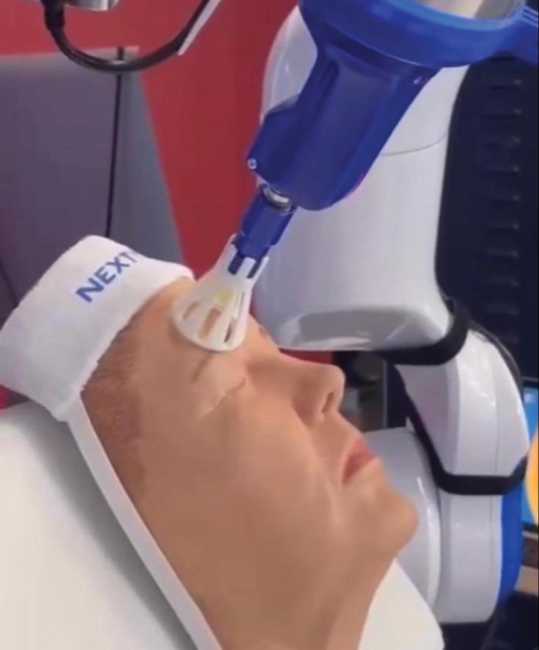
Fig.: Photograph showing LENA, a light-enabled neuro-robotic arm. The photo was taken during a conference in Paris in 2023 and shows the device in action.
Advantages:
Robotic technology in facial filler injections brings several advantages, including increased accuracy, reduced pain, consistency and standardised results. Robots can navigate complex facial anatomies, measure injection depth and avoid danger zones, leading to faster treatment times and improved access in remote areas.
Disadvantages:
Despite the potential advantages, there are challenges. High acquisition and maintenance costs, limited flexibility, a lack of personalisation and the absence of human empathy are factors to be considered. Ethical concerns and patient preferences also play a decisive role in the acceptance of robotic technology in aesthetic procedures.
Future prospects:
The future looks promising, as sensors on robotic arms, equipped with imaging technologies such as ultrasound and optical coherence tomography, improve safety and precision. Current research is exploring the integration of artificial intelligence and machine learning to personalise robot-assisted procedures by learning from facial features, outcomes and patient feedback.
Conclusion:
Although robots offer unprecedented advantages in facial filler injections, they do not replace the expertise of experienced human practitioners. As the technology continues to advance, the current limitations will be addressed, and ensuring patient-centred, transparent practices will be crucial. Nevertheless, the integration of robots into facial aesthetics holds immense potential and could usher in a new era of accuracy, consistency and safety in aesthetic procedures.
Source: Kapoor et al. Indian J Plast Surg. 2023 Oct; 56(5): 470–473. Published online 2023 Oct 18. doi: 10.1055/s-0043-1775867