How does wearing a face mask affect eye movement patterns during the COVID-19 pandemic?
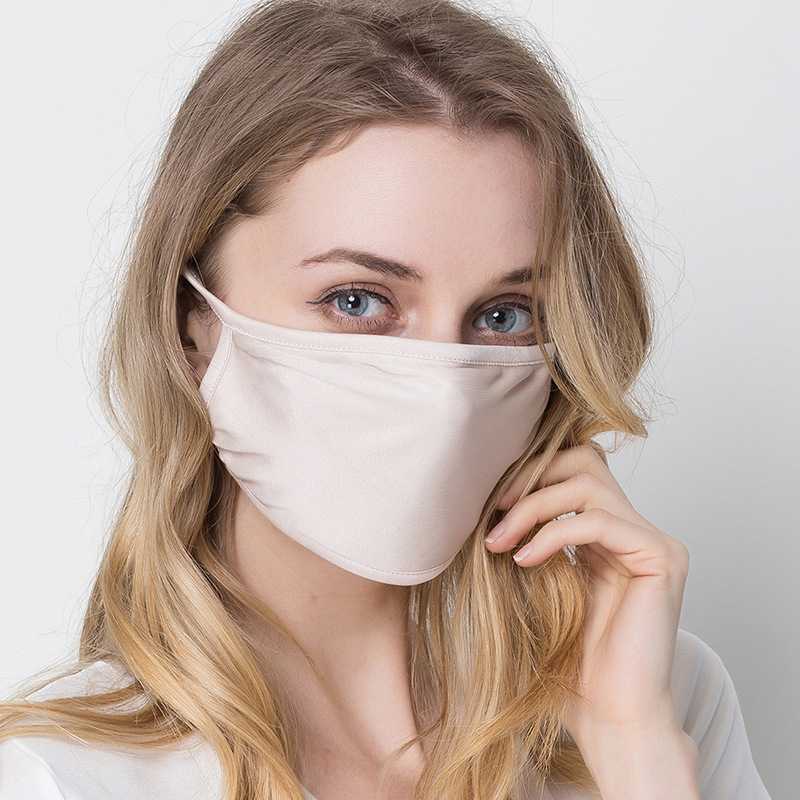
How does wearing a face mask affect eye movement patterns during the COVID-19 pandemic?
Since the worldwide spread of the coronavirus SARS-CoV-2, face coverings have become an everyday sight. It is therefore quite conceivable that this has a considerable impact on the visual perception of the face and thus also of beauty.
Studies published to date show that the perioral region plays a key role in the visual perception of dynamic or mimetic movements, whereas the periorbital region provides information on sex and for the interpretation of emotions. It is therefore very conceivable that wearing face coverings considerably limits facial perception and thus also the assessment or interpretation of facial expressions, emotions and also a person’s beauty.
So what happens when the lips and the perioral region are covered, and what implications does this have for the perception of beauty and for treatments in aesthetic medicine?
Researchers at Ludwig-Maximilians-Universität München and the Mayo Clinic in Rochester, USA, led by Prof. Sebastian Cotofana, recently addressed precisely this question in a recently published cross-sectional study.
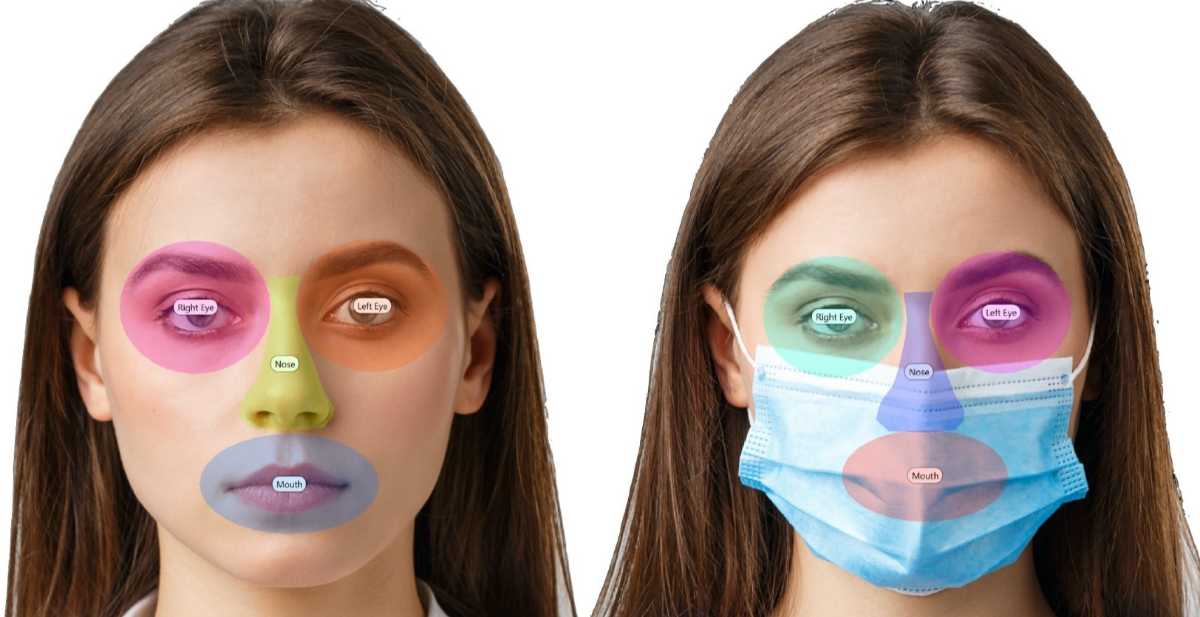
For this purpose, the eye movement pattern of a total of 64 study participants (36 female and 28 male; mean age = 31.84 ± 9.0 years) was analysed while they viewed two images (face without / with a face covering) for 8 seconds each.
The interesting result?
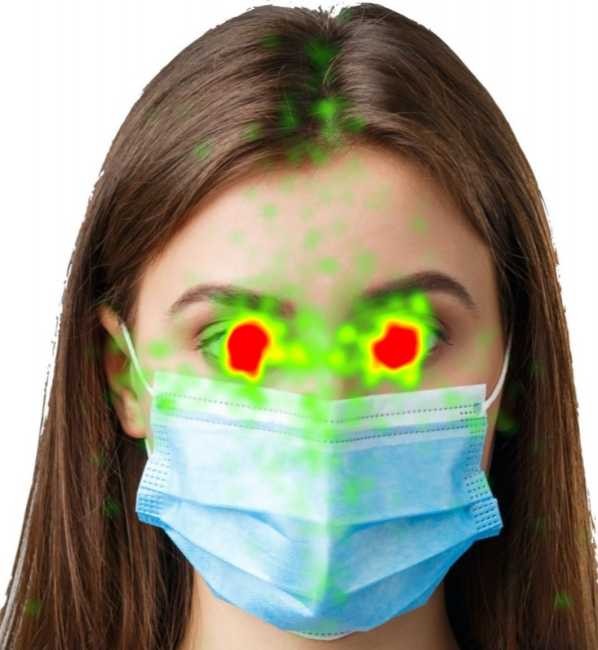
The researchers were able to show that the sequence of eye movements when focusing on facial regions was not changed by wearing a face covering! The sequence still remains: perioral > nose > periorbital.
BUT: wearing a face mask significantly prolonged the time spent focusing on the periorbital region and also increased the number of repeated eye fixations during the interval of visual stimulus presentation
The conclusion?
These data could be used both by practitioners and by manufacturers of medicinal products and medical devices to adapt patient communication, facial analyses and treatment strategy during the pandemic. In doing so, the focus could be placed more strongly on the periorbital region.
Source:
Frank et al. Aesthet Surg J. 2021 Mar 8 : sjab121. Published online 2021 Mar 8. doi: 10.1093/asj/sjab121